
What Is a Good Gross Margin for a Staffing Firm? Benchmarks by Firm Type
If you run a staffing or recruiting firm, you have probably asked this question at least once:
Is my gross margin actually good?
Most owners look at revenue growth first. Margin comes second. Cash flow comes last. By the time margin becomes a real concern, the business already feels tighter than it should.
This article will help you understand what a “good” gross margin looks like for staffing firms, how benchmarks vary by firm type, and how to tell whether your margin is actually supporting a healthy business.
What Gross Margin Means in a Staffing Firm
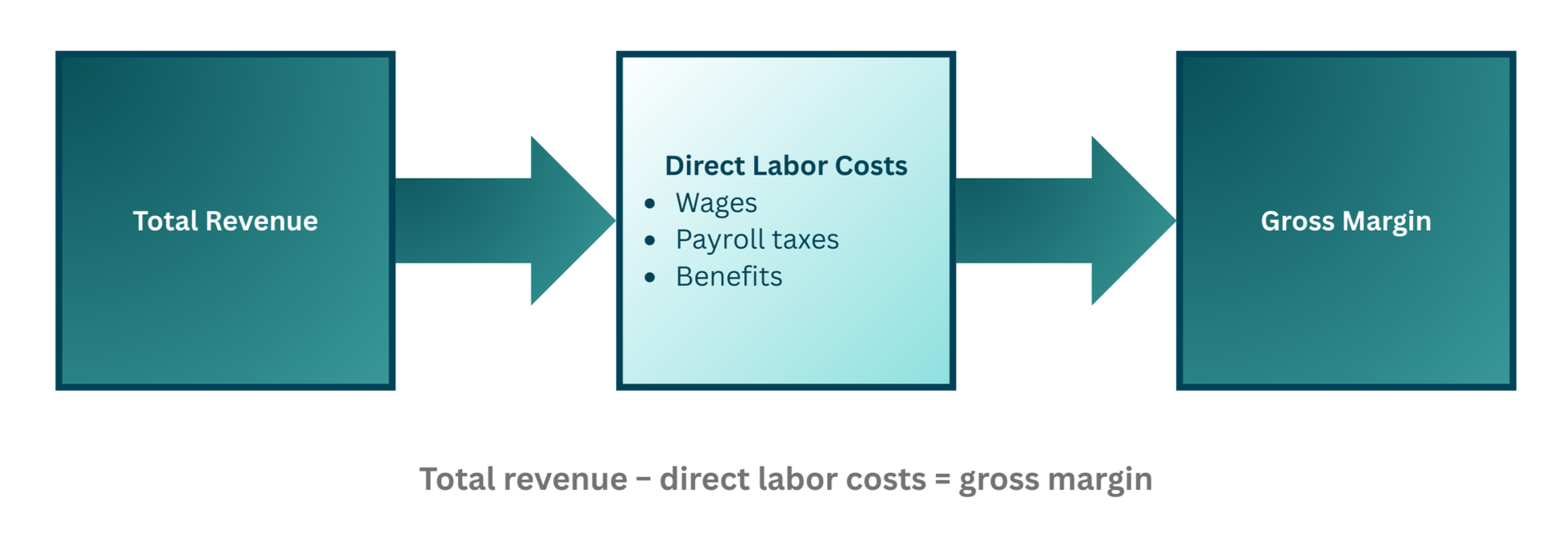
At a basic level, gross margin is:
Revenue minus direct labor costs
For staffing firms, direct labor typically includes:
W2 wages paid to placed employees
Employer payroll taxes
Benefits tied directly to those employees
Gross margin does not include:
Internal recruiter salaries
Sales commissions
Software and tools
Office, insurance, or admin costs
Gross margin answers one question:
How much money is left after paying the people who generate revenue?
Everything else comes out of that remaining margin.
Gross Margin Benchmarks by Staffing Firm Type
There is no single “good” gross margin for all staffing firms. Benchmarks vary widely depending on the business model, client mix, and labor structure.
Below are typical ranges, not targets.
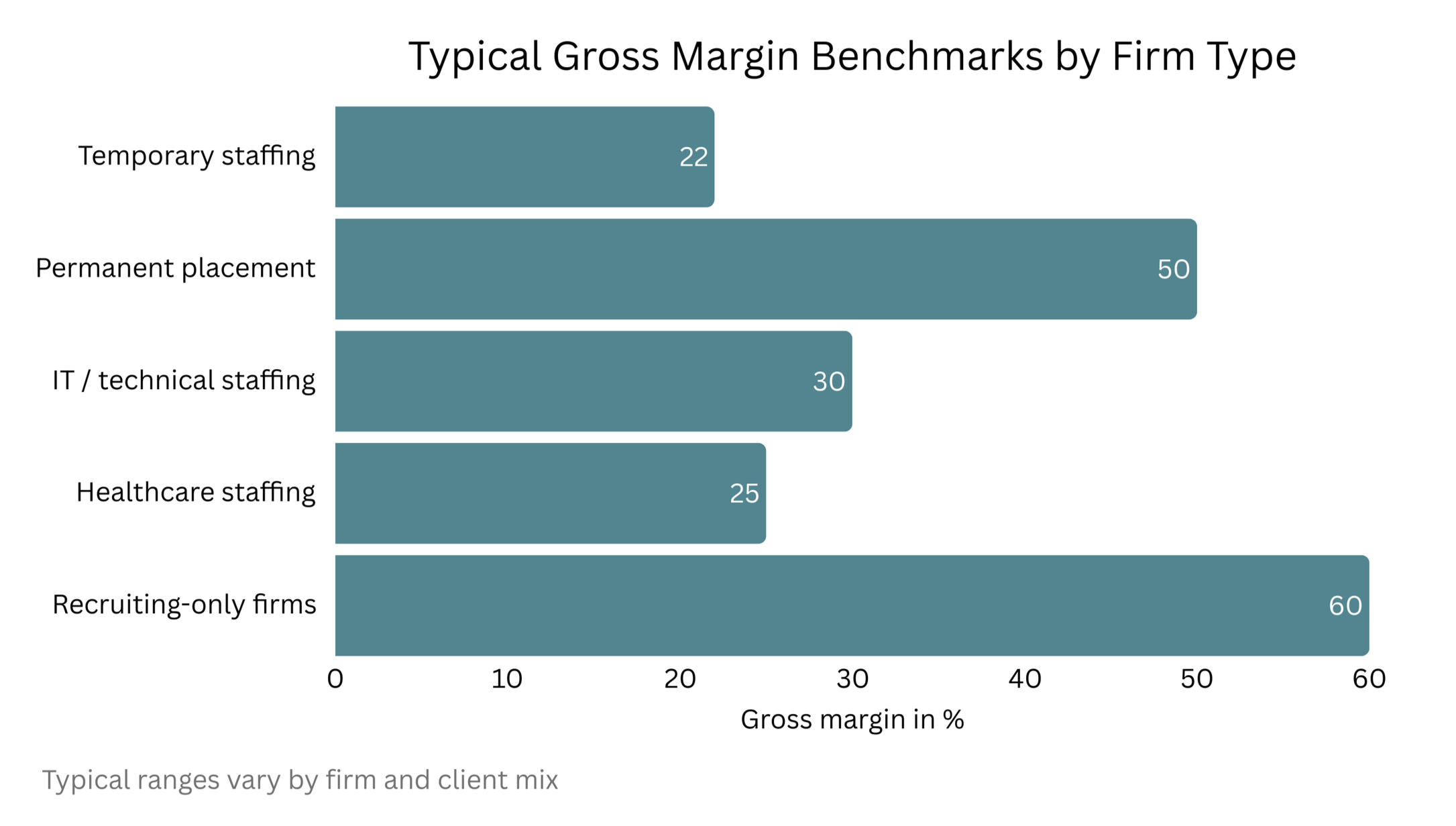
Temporary Staffing: ~18% to 25%
Lower margins are common due to:
Wage pressure
Client rate sensitivity
High payroll frequency
Firms on the lower end usually struggle with cash flow even when revenue grows.
Permanent Placement: ~40% to 60%
Higher margins reflect:
One-time placement fees
Lower payroll risk
Stronger pricing leverage
However, income volatility is higher and forecasting is harder.
IT or Technical Staffing: ~25% to 35%
Margins depend heavily on:
Skill specialization
Client concentration
Contract length
Well-run firms here can support higher overhead, but poor pricing discipline shows up fast.
Healthcare Staffing: ~20% to 30%
Margins vary based on:
Compliance costs
Credentialing requirements
Urgency of placements
High volume can mask thin margins until payroll timing creates stress.
Recruiting-Only Firms: ~45% to 70%
These firms often have:
Fewer direct labor costs
Higher reliance on recruiter productivity
Greater sensitivity to incentive structures
High gross margin does not automatically mean high profit.
Why “Good” Gross Margin Is Firm-Specific
Benchmarks are useful, but they are not enough.
Two firms with the same gross margin can have very different outcomes depending on:
Client concentration
Recruiter output
Pay rate vs bill rate discipline
Internal compensation structure
A firm with a 28% gross margin and strong systems may outperform a firm with a 35% margin and poor visibility.
A good margin should:
Cover overhead comfortably
Absorb slow-paying clients
Fund growth without constant stress
If it cannot do those things, it is not actually good.
Why Staffing Firm Margins Erode Over Time
Most margin problems are not sudden. They happen quietly.
1. Discounting to Win or Keep Clients
Small concessions add up, especially when wage costs rise but billing rates stay flat.
2. Labor Costs Increase Faster Than Rates
Payroll adjusts immediately. Client pricing often lags or never changes.
3. Poor Visibility by Client or Role
Average margin hides underperforming clients that slowly drag results down.
By the time owners notice, cash flow is already tight.
Warning Signs Your Gross Margin Is Not Healthy
Gross margin issues usually show up indirectly first.
Common warning signs include:
Revenue growth without cash improvement
Constant pressure to collect receivables
Payroll stress despite reported profitability
Surprises when financials are finalized
If any of these feel familiar, margin clarity is likely missing.
What to Do Before You Try to “Fix” Margin
The instinct is usually to raise prices or cut costs.
That can work, but only after you understand:
Margin by client
Margin by role or placement type
Timing differences between payroll and collections
Without that clarity, changes are guesses, not decisions.
Final Thought
A good gross margin is not about hitting a benchmark. It is about supporting a business that feels stable, predictable, and scalable.
If your numbers look fine but the business feels tight, gross margin deserves a closer look.
In our Accounting Review, we break down gross margin by client, role, and recruiter so staffing firm owners can see exactly where profit and cash flow are being created or lost.