
Why Profitable Staffing Firms Still Run Out of Cash
If your staffing firm shows a profit on paper but still feels financially tight, you’re not alone.
Many staffing firm owners assume that if revenue is growing and margins look fine, cash flow should naturally improve. In reality, staffing is one of the easiest industries to grow into a cash crunch.
This article explains why profitable staffing firms still run out of cash, what causes it, and how to recognize the warning signs early.
Profit and Cash Flow Are Not the Same Thing
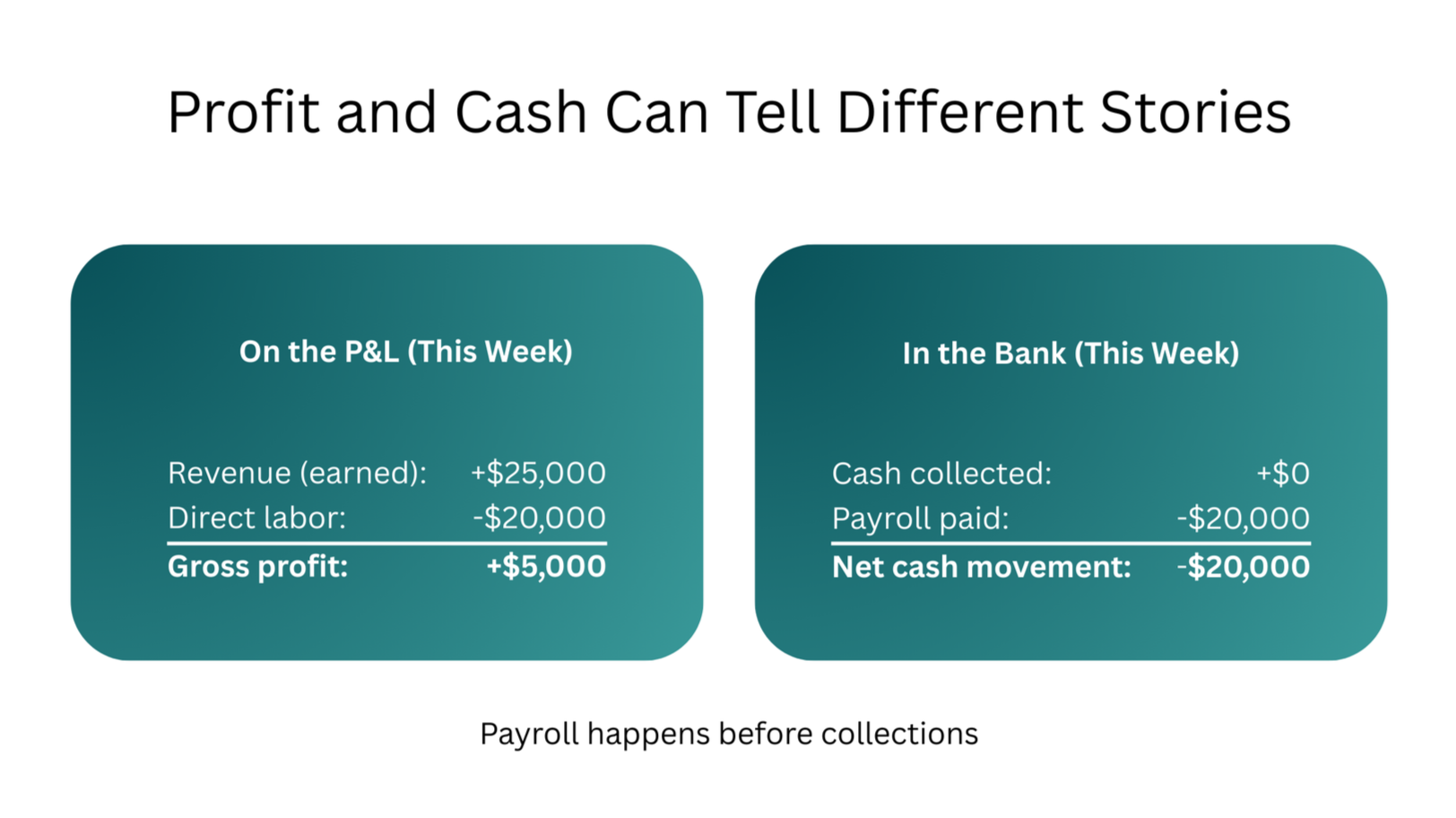
Profit and cash flow are related, but they are not interchangeable.
Profit is an accounting measure.
Cash flow is about when money actually moves, not when it’s recorded.
A staffing firm can report a profit while its bank balance declines. That happens when revenue is recognized before the cash is actually received.
In staffing, that timing gap matters more than most owners expect.
The Staffing Firm Cash Flow Reality
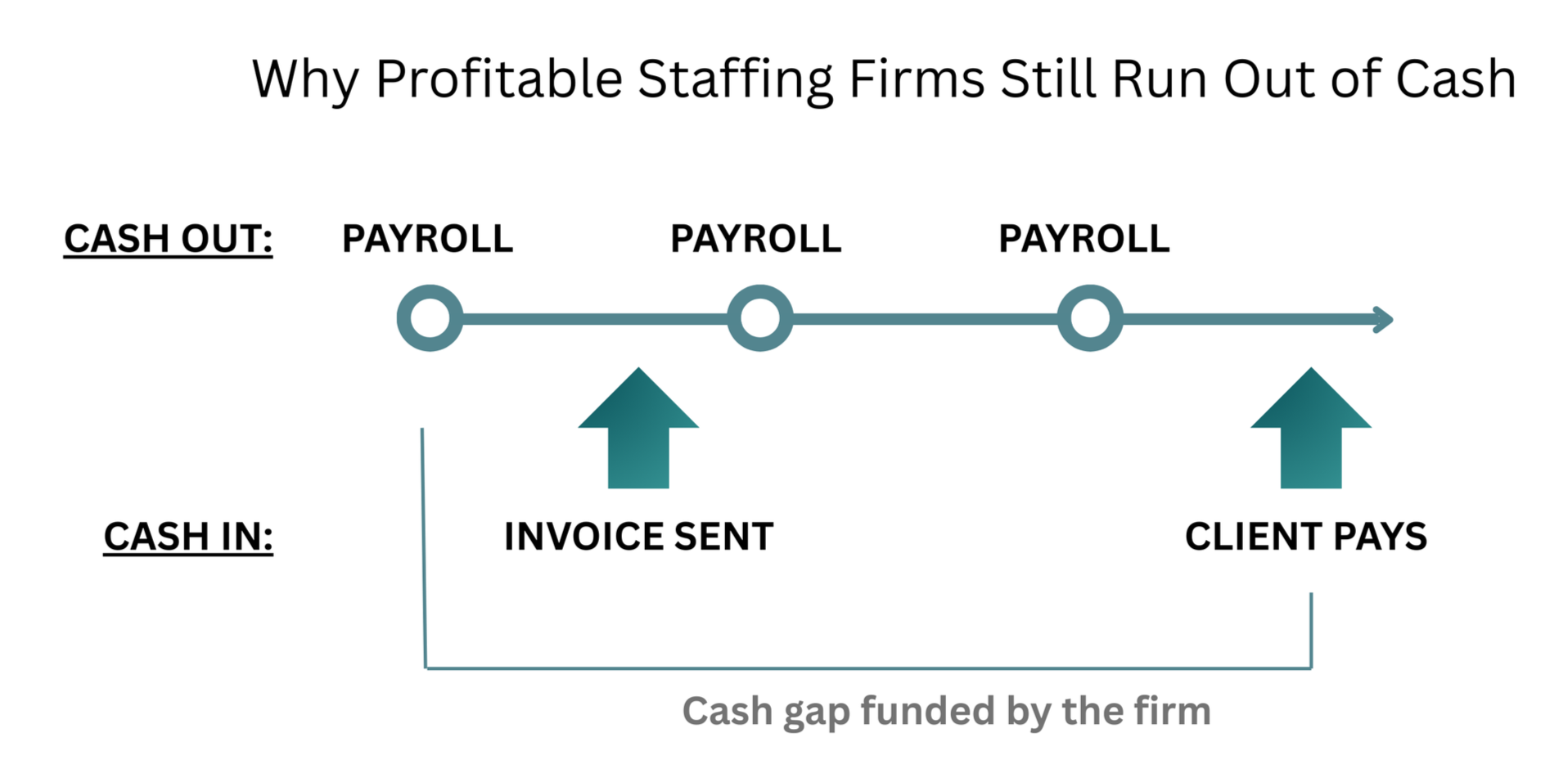
Staffing firms operate on a built-in cash flow mismatch.
Payroll goes out weekly or biweekly.
Clients often pay in 30 to 45 days.
Sometimes longer.
That means staffing firms routinely pay employees before they collect from clients. As the firm grows, that gap grows with it and cash pressure often increases before it improves.
Four Reasons Profitable Staffing Firms Still Run Out of Cash
Payroll Timing vs Client Payments
This is the core structural issue in staffing.
Even when placements are profitable, the firm must fund payroll during the gap between paying employees and collecting from clients. The faster the firm grows, the more cash it must front.
This is not a mistake. It is the business model. Problems arise when the gap is not actively managed.
Growth Increases Cash Needs Before It Helps
More placements mean:
More payroll
Higher payroll taxes
Larger benefit obligations
Revenue growth feels positive, but it increases short-term cash demands. Firms that grow quickly without planning for this often rely on lines of credit just to keep up.
Growth without cash planning creates stress, not relief.
Poor Visibility Into Accounts Receivable
Many staffing firms track total receivables but do not track who pays late consistently.
When late-paying clients are treated the same as reliable ones:
Cash forecasts become unreliable
Payroll risk increases
Owners spend more time chasing money
Late payments quietly turn clients into lenders.
Average Gross Margin Hides Real Problems
Gross margin often looks acceptable when viewed in total.
But averages hide:
Low-margin clients
Roles with high payroll exposure
Placements that consume disproportionate cash
A firm can look profitable overall while a small group of clients drives most of the cash strain.
Warning Signs Cash Flow Is the Real Issue
Cash flow problems usually appear indirectly first.
Common warning signs include:
Regular anxiety around payroll dates
Increasing reliance on lines of credit
Revenue growth without improved liquidity
Constant follow-ups on receivables
Hesitation to hire internally despite “profitability”
If these feel familiar, the issue is likely structural, not effort-based.
Why Faster Collections Alone Do Not Fix the Problem
Improving collections helps, but it is rarely the full solution.
Cash flow issues in staffing are usually driven by:
Client mix
Pricing discipline
Payroll exposure
Timing differences
Without understanding how these interact, changes are reactive instead of strategic.
Cash flow problems are usually system problems, not motivation problems.
What to Look at Before Making Big Changes
Before raising prices, cutting costs, or taking on more debt, staffing firm owners should understand:
Cash conversion cycle
Client-level payment behavior
Margin and cash exposure by role
Payroll obligations tied to growth
Clarity here prevents overcorrection later.
Final Thought
Running out of cash does not mean your staffing firm is failing. It often means the business has outgrown the systems managing it.
When profit and cash flow tell different stories, cash flow deserves the closer look.
In our free Accounting Review, we help staffing firm owners identify exactly where cash pressure is coming from, before it turns into a crisis.