
What Is a Healthy DSO for a Staffing Firm? How to Reduce It Without Burning Relationships
In staffing, DSO is really a cash flow metric, not an accounting metric.
DSO (days sales outstanding) is simply how many days it takes, on average, to turn an invoice into cash. The longer it is, the more cash you are forced to float for payroll, even if your gross margin looks fine.
That is why staffing firms can feel tight while showing a profit. Payroll moves fast. Cash comes in slow. DSO is the scoreboard for that gap.
This post covers what a healthy DSO looks like for staffing firms and a collections system you can run without turning into the “collections guy.”
What is a healthy DSO for a staffing firm?
A healthy DSO depends on your payment terms and the type of clients you serve. The goal is not a perfect benchmark. The goal is this:
DSO should be close to your payment terms plus a small buffer.
As a practical guideline:
If most clients are net-15, a healthy DSO is often in the 20–30 day range
If most clients are net-30, a healthy DSO is often in the 35–45 day range
If most clients are net-45, you are choosing a cash-intensive model and need stronger billing and collections to stay stable
Here’s the simple diagnostic:
If your DSO is consistently 15+ days above your terms, you do not have a “client problem.” You have a system problem.
Why DSO matters more in staffing than in most businesses
In many industries, slow-paying customers are annoying. In staffing, they are dangerous.
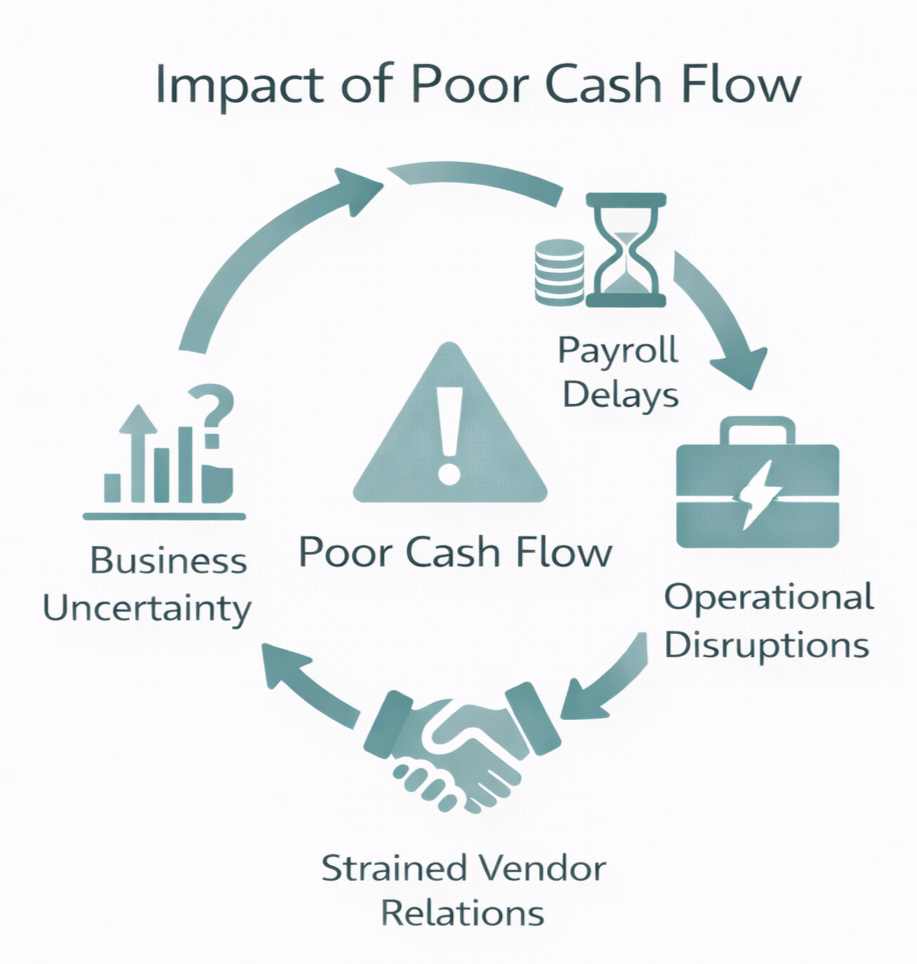
Every extra day of DSO increases the working capital you need to fund payroll. That means:
more cash tied up in AR
more reliance on a line of credit or owner cash
more stress during growth spurts
less ability to hire or invest
You do not fix this by hoping clients pay faster. You fix it by building a predictable machine around billing and collections.
The two root causes of high DSO
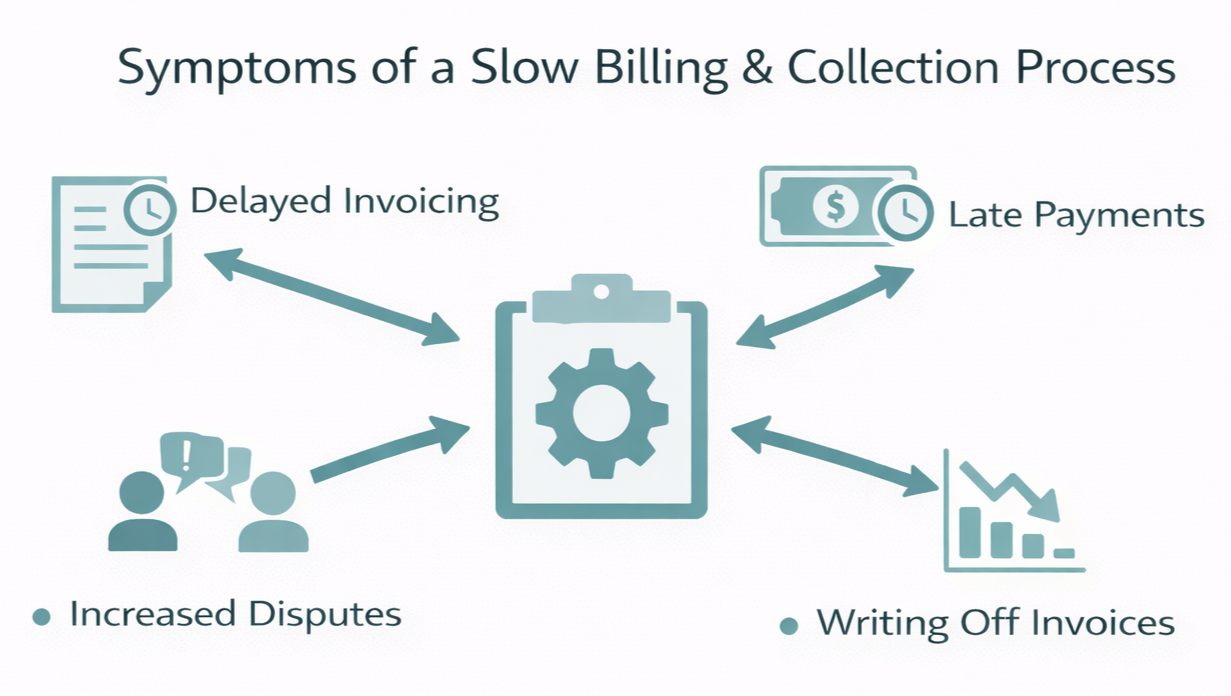
Almost every DSO problem comes from one of two places:
1) Billing friction (invoices go out late or wrong)
Common billing issues:
timecards approved late
missing hours or corrections
rate disputes
missing PO numbers or required backup
inconsistent billing cycles
When billing is sloppy, clients have an excuse to delay. And the longer an invoice sits, the less likely it is to get paid quickly.
2) Collections friction (follow-up is inconsistent)
Even with clean invoices, AR gets old when follow-up is passive.
Most staffing firms do not have a collections system. They have a vague intention to follow up “soon.” That is how DSO drifts.
The key mindset shift: You do not reduce DSO by being tougher. You reduce DSO by removing excuses and running a cadence.
A practical collections system that does not burn relationships
This is a simple weekly process that works because it is consistent, not aggressive.
Step 1: Run AR once per week (same day, same time)
Pick a weekly AR day. Many firms do Monday or Tuesday.
You pull:
AR aging summary
list of past due invoices
top 10 balances by client
Then you follow a three-tier sequence.
Tier 1: Current invoices (no outreach)
Goal: keep billing clean and predictable so they pay on time.
What you do instead of emailing:
Send invoices on a consistent cadence (same day/time weekly or biweekly)
Make invoices dispute-proof (rates, hours, PO, backup attached)
Include clear remittance info and due date on every invoice
Track “invoice sent date” so you can spot billing lag
No chasing when it’s current. Just eliminate reasons for delay.
Tier 2: 1–15 days past due (friendly nudge + remove friction)
Goal: make payment easy and uncover issues early.
Message:
“Quick follow-up on invoice #____. I reattached it here. Is there anything you need from us to get it approved, and can you share an expected payment date?”
Key moves:
resend the invoice
ask if anything is needed to process it
ask for a payment date
Tier 3: 16–30+ days past due (firm, process-based escalation)
Goal: escalate through process, not emotion.
Message:
“We need to keep the account current to continue supporting active assignments. Can you confirm when payment will be released, and who the best contact is in AP to finalize this?”
If needed, escalate to:
AP manager
controller
operations leader
Your tone stays calm. Your boundary gets clearer.
The real secret: collections starts upstream
If you want lower DSO without tension, focus on invoice certainty.
The most relationship-friendly way to collect is to bill cleanly:
lock rate sheets and approval rules up front
require timecards by a hard cutoff
standardize invoice formats and backup
send invoices on the same cadence every cycle
Clients pay faster when the invoice is predictable and hard to dispute.
Policies that protect you (without sounding aggressive)
You can keep relationships strong while still protecting the business:
Credit limits by client (based on history and size)
Deposits/retainers for new clients or new divisions
Shorter terms for repeat offenders
Pause placements if AR exceeds an agreed threshold (days or dollars)
Position these as standard operating controls. Not threats.
What to track weekly
Keep it simple:
DSO trend (weekly or monthly)
% of AR over 30 days, over 60 days
top 10 past due invoices by dollars
billing-to-invoice lag (timecards approved to invoice sent)
Track those consistently, and DSO improves without needing a personality change.
Final Thought
A healthy DSO is not about pressuring clients. It’s about a billing and collections system that makes paying you simple and predictable.
If your terms are net-30 but your DSO lives at 55, the fix is usually process, not people.
In our free Accounting Review, we help staffing firm owners tighten invoicing and build a practical AR cadence so cash comes in faster, without damaging client relationships.